27 March 2011

Photos by Iñigo Bujedo Aguirre

From wiki, to make easy for me showing off something that make us proud, Brazilians:
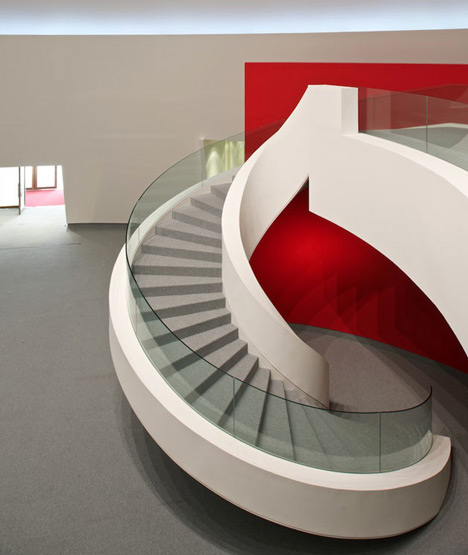
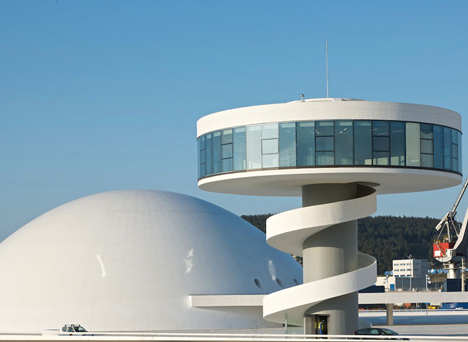
The Brazilian architect Oscar Niemeyer (designer of Brasilia and one of the most important architects in the world) was awarded with the Prince of Asturias Award for Art in 1989. That was the origin of the relationship between Oscar Niemeyer and the Principality of Asturias. Years later, Niemeyer donated a big project to the Principality. His design has become a project meant to be an international reference because of its production in the cultural field. It will be dedicated to culture and education. This centre will be the first Oscar Niemeyer's work in Spain, and he has said he believes it the most important in Europe.

.

16 March 2011

Building Maker

Maybe it´s old news to some, but brilliant news:

9 March 2011

ARCHITIZER published the winners of evolo 2010


First place of Evolo Contest 2010

Unfortunately none of ours students got some prize. No wonder - only one had applied, whereas the others groups gave up - I do not know why.

Actually I know... It has to do with the demotivation caused by a kind of approach of architecture which slip inspiration and motivation since the first modules.

Blame on us, tutors, blame on us....

More to read: http://www.architizer.com/en_us/blog/dyn/16436/winning-skyscrapers/

27 January 2011

Skyscraper International Contest

The pictures bellow are from projects created by my students in the previous semester (2010/2). The module was concerned giving answers to basic questions: how is the new meaning of skyscraper in the 21th Century and which are the responsabilities that those mega-structures brings together.

As the contest is running, I will not give the name of the authors, but just explore them in a glance.

This first two pics are an "Urban Farming Research Centre". His Author explain:

Scenario

Nowadays, to feed the world's population of 6.8 billion people, it's needed an equivalent area of entire South America. According to some studies, yet by 2050, with 9 billion people, we may need an area equivalent to Brazil. So, there is a clear necessity to look for new developments of agriculture.

This proposal do not have intention to present a skyscraper that explores maximum deployment of resources in smallest areas, but it constitutes a first essay where skyscrapers like that could pop in the skyline of the city.

In the sense this skyscraper should be a powerful tool to local city farmers, who will make their all experiments and will find the best conditions to produce vegetables and ease their labor. In the midst of many objectives, the building aims to be a center of a local network of urban farmers since his site is in front of a central market of Belo Horizonte city.

The vertical agriculture

The skyscraper has 24 floors where research concerning hydroponics are developed. It has also a experimental greenhouse dedicated to research plants disease and other greenhouse which research no hydroponic farming.

Since the main building is a center of research in hydroponics, there is also a visitors center, with restaurant, stores, exposition hall and multimedia room; there is also an analysis center, with labs (researching water, soil, genetic and others) that can support the community; as well there is a loading area and a warehouse.


Technology, potable water and size of farms

Due to our current technology today we can build skyscrapers. Since immemorial times, as Babylon era, we can see human’s desire of farming and gardening vertically. Adding up to this, nowadays we seek for technological support to built environmental friendly towers and sustainable buildings that create synergic influences within their environment.

Beyond sustainability, in this project we were concerned of a research process that include the building itself as an experiment to cultivate hydroponics. It is justified considering the massive amount of potable water demanded by any traditional agriculture and a giant size of lands used to cultivate. If we not pay attention on those bigger farms, we will devastate ours forests in the behalf of an expansion of agricultural areas.

A lot are being spent in order to get this buildings sustainability. But this one is not to turn other buildings more sustainable, it is to turn life more sustainable. We see food as something that has almost no impact on the planet, but the truth is that agriculture uses lots of natural resources. A good percentage of all potable water is used for agriculture, and we may also say that lots of forests are being devastated. Here in Brazil, the bounds of the Amazon rainforest are being pushed by big farmers.

All the technology used in this building is developed and ready to use. That means that the project is not a prognosis of a technological state in the future. Three concerns were explored in the architectural solutions: all spatial elements were planned to permit plants to grown better, with light, water and temperature.


This second project was probably the one of the most exciting in terms of seeking solutions to horizontal occupations through vertical structures and distributions of empties sites to be occupied by their inhabitants. Certainly this would be prized if the team took at the end the task of sending it to the contest. I guess they give up, without any new I noticed.
Another noticeable work was this, despite the poor graphical solution. It was a Shopping locate nearly our Administrative Centre of the county. A massive structure shelter shoppings, fairies, cinemas, leisure and offices, crossing the highway in fron of it and, at the sametime, connecting two neighbouhoods: Jardim Canaã e Centro Administrativo.

This next project was amazingly developed to permite flexible arragements of containers which would be transformed in places where exhibitions would planned.


It is a pitty that graphical quality of this was poor, but it was one of the most expressive in terms of structural solution, with a beauty result. It was destinated to integrate Shops, Offices and hostel. I am wondering wheather the team will give new pics or not...
A little bit more traditional the approach of this project was mixing up hotel, offices and shopping. The most impressive was the resultant silhouette in the landscape, creating a landmark.
The interesting approach of this was developing a strucuture with new materials, evolving to a ramp along the whole building.

This built, as others, solved the junction betweeen Hotel, offices and shop. The plasticity of the conjoint was adequate to create a landmark in the region as it can be seem.


23 January 2011

Instrumentation for blindness

Architecture contains many fields where there are few absolutes and where self-expression and personal experience are vital elements. The most important for me, in those cases, is recognizing and nurturing the individual temperaments and natural abilities of the students. They should be challenged to challenge themselves. This only happens when we, as tutors, encourage students to develop within themselves a genuine sense of enthusiasm, self-motivation, personal commitment and professionalism. Beyond familiar experiences, they should cope clinging new challenges as an opportunity to grow.

In terms of the teaching and learning fundaments to complement the study of Architecture, some years ago there was a module called “Plastic”, where the students were mainly motivated to study arts and exercise 2D and 3D compositions in all sort of materials. I was in charge to structure that module, and I was absolute convinced that, despite setting the student as free as possible, the structure of the module should be guided in a certain traditional way. By “traditional” I mean basing the structure of the course with some traditions in the teaching of arts and crafts: treating visual elements as similar to words, and deploying some notions as proportions, visual tensions, configuration and visual rhythm as similar to a visual grammar. Yet in that time I was aware about the critics: a non probed fear that all students would be equal in sensing and expressing themselves. Probably, this fear came from the haters of the Beaux-arts model in Brazilians school of arts by the beginning from last century. I myself were never concerned about that, as I knew that one can never break any tradition if you do not know which tradition you are intended to surpass. I knew that the most revolutionary artists in all fields of art were firstly very well knower about their matter. I used the three years of those experiences to analyse as my dissertation to receive my Postgraduate Certificate in High Education by the School of Education of The University of Sheffield (see here), where I also did my doctoral.

When I arrived in 2008 from England I found a class where the students looked as brains empties of that motivation, and along the time I noticed that most of them were out of their soul, lost to study or pursuit their intentions on studying architecture.

In the right, a view of a traditional student: spread and memorize details.

I notice also that finally the curriculum was modified and there was not room to the “traditions” I mentioned beforehand, and mainly in the first modules were modified to a new kind of approach that, afaik, nobody in fact knows.

Perhaps, today, we can convince nowadays those who avoid and are ashamed for using books as “Art and Visual Perception : a Psychology of the Creative Eye” ( Arnheim R. (1956). London, Faber and Faber Limited.) or “Univesos da Arte” (Ostrower, F. (1993) Rio de Janeiro, Campus).

New studies, applying “eye-tracking” technology(Leicester 2008) demonstrate that the “traditional” education on art gives more accurate way to see the world(Kim 2009) to students, that means, sighting become really different and more accurate for those who have the knowledge of the “tradition”… At the same time, trainees gains a quickly view – in a glance, with admirable memory of visual elements(Vogt 2007).

I understand that the mistake of avoiding traditional strategies is disseminated in ours courses and I really feel sorry about this. With so many evasive justifications and other amount of opaque “explications”, the study of arts and its history are being abandoned, causing a dangerous blindness in our students. Will anyone suggest that talent is a gift given from birth?

Odd Nerdrum, "Self Portrait as Baby", Oil, 2000

Some references I mentioned here:

Kim, Y.-j. e. A. (2009). "Students’ Visual Perceptions of Virtual Lectures as Measured by Eye Tracking " Human-Computer Interaction. New Trends Volume 5610: 85-94.

Leicester, N. r. f. T. U. o. (2008) "Understanding the wow factor - Researchers combine social science and neuroscience to examine responses to art." NEWS - PRESS RELEASES Volume, DOI:

Vogt, S. M., S (2007). "Expertise in pictorial perception: Eye-movement patterns and visual memory in artists and laymen." Perception 36: 91-100.

19 January 2011

ApocalypseProof house

It sounds to me as talking about which kind of coffin I will like to be buried. Anyway, japanese company Daiwa has created a post-disaster self-installing self-sufficient house. Daiwa Lease is part of the Daiwa House group, Japan’s largest homebuilder, specializing in prefabricated houses.


Have a look in this video to check:


Could it be inspiring to people who search for new types of hoouses, coping with poverty and natural disasters in Brazil? Well, at least one thing do not permit so: the price. CHeck the site of Daiwa to discover the price. Afaik, it will take a big amount of $ from anyone who decide saving his live with this coffin...

18 January 2011

Innovation in education

"Teaching is an art, engineering is an art, urban planning is an art, photography is an art, business is an art, and design is an art"


"I see serious challenges with people coming out from design schools (as well as business schools) and I wonder what are they teaching these people at some schools today. The missing interdependency of broader functions and the lack of visual sensibilities are impacting the quality of graduates."

"Through art, students can learn to have alternative contact with any kind of knowledge or information about different thematic topics. When a student is interacting with a piece of art, he/she can live a holistic experience, with his mind by the symbols, with his/her body by the senses and with his/her heart by the emotion evoked. A piece of art is a very special because it carries the human history and provoke ways of developing perspectives, which is lacking in MBA education."

17 January 2011

Eco-Architecture


I am repeating this topic, but now I added an abstract to give you in a glance the idea of our article at Wessex conference. We presented this chapter in March 2010, when the conference took place at A Coruna.

I and m. Malard discussed the use of Ubiquitous Computing (Ubicomp) systems in the design of urban revitalizations and refurbishments, using a specific methodology that I researched in order to consider Information Technology (IT) as one more instrument to harmonize the urban scene with the landscape, minimizing the impacts that those processes can bring.

The hypothesis is that when IT components and services are strategically deployed – respecting the structure of the places – they can introduce computational resources that will allow human activities to better harmonize with the landscape.

This hypothesis is based on Heidegger´s thoughts, when he reflects about the concept of “circumspection”, meaning that when a technological apparatus works fine, its presence recedes in the human consciousness. When components and services of IT are deployed strategically in a place – respecting its topological structure – those devices and services can add computational capabilities that improve human activities and make them integrated with the natural environment in a coherent and continual gradient of meaning, functionality and technological availability. Human activities can better harmonize with nature by means of the use of ordinary objects and spatial elements that act as interfaces to access computational services, supporting the activities of a place, making them more efficient, producing less pollution, reducing their cost and energy consumption. Mark Weiser’s idea about the evolution of Ubicomp also reinforces that main hypothesis.

According to him, the spread of computational resources in the environment through Ubicomp will bring a new era of calm technology in which human dwelling will be supported by intelligent environments.

To test that hypothesis, a theoretical framework was developed and applied by architects in three urban projects, in cities of the United Kingdom and South Korea.

Focusing on the potential within IT components to promote qualities such as territoriality, privacy, identity and ambience, three case studies were described and analyzed. There are reasons for appropriately deploying IT based on the nature of the place and the activities that happen within it.

To see more about it, please access:
http://library.witpress.com/pages/PaperInfo.asp?PaperID=20805

15 January 2011

Goodbye, Noughties (?)

"Convergence is a new paradigm that can yield critical advances in a broad array of sectors, from health care to energy, food, climate, and water."
report, "The Third Revolution: The Convergence of the Life Sciences, Physical Sciences and Engineering,"

By January 4th MIT news issued in its website of news a white paper where "convergence" is argued to be a new concept to the new days after the "noughties"*. It is described as "a new model for scientific research, which involves the merger of life, physical and engineering sciences — to foster the innovation necessary to meet the growing demand for accessible, affordable health care."

In a glance, about this white paper, it is visible the valuables contributions from Biology and Molecular Research as matters to guide new ways to think scientific approach. But a closer look will make conclude about the need of investments and policies regarding the research model that are being developed from Health research. An old conclusion that have affected a wide variety of models that never come out in the first worlds economies.

_________
*For brazilians readers, let me explain: "noughties" is normally used in a humourous manner to refer to the lack of new ideas and creativity that some author alleged that happened along the years 2000-2009. The word comes from nought (it sounds "not" in portuguese) that means "nada", "fracasso", "Zero", among others meanings.

19 September 2010

Trip

At Toulouse, refreshing after a heavy work day.

It was the time visiting the main entrerprises which does or maintain aircrafts in Europe. As part of one project regarding our brasilian situation, the trip was very inspiring, permitting to collect new information to all of us. I myself had paied attention in the use of IT in the places, and in a correct opportunity I would be lightining this aspect of our journey to France and Germany.